
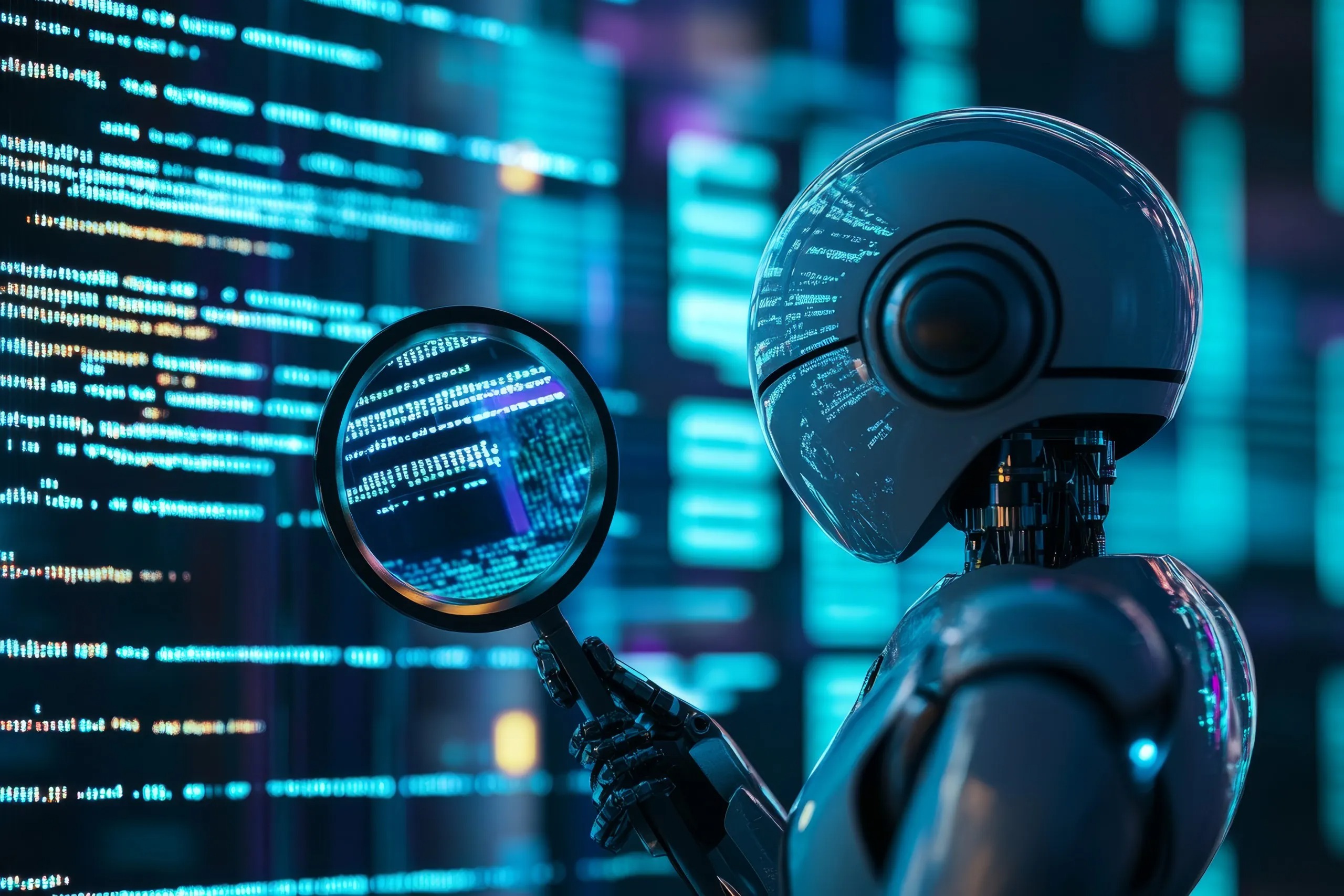
Artificial Intelligence (AI) has evolved remarkably over the decades, transforming from a theoretical concept into a cornerstone of modern technology. Its journey began in the mid-20th century, when pioneers like Alan Turing and John McCarthy laid its foundational principles. Turing’s work on computation and intelligence provided a framework for understanding machine capabilities, while McCarthy’s coining of the term “artificial intelligence” at the Dartmouth Conference in 1956 marked AI’s official inception as a field of study.
In its early years, AI research focused on symbolic reasoning and problem-solving. The development of algorithms that could mimic human thought processes led to programs capable of playing chess or solving mathematical problems. However, progress was hindered by limited computational power and an overestimation of what machines could achieve without vast amounts of data.
The 1970s and 1980s witnessed periods known as “AI winters,” characterized by reduced funding and interest due to unmet expectations. Despite these setbacks, important advancements occurred during this time. Expert systems emerged, utilizing rule-based logic to simulate human expertise in specific domains such as medical diagnosis or financial forecasting.
The resurgence of AI began in the late 1990s with increased computational power and access to large datasets. Machine learning techniques gained prominence, allowing computers to Artificial Intelligence learn patterns from data rather than relying solely on pre-programmed rules. This shift enabled significant breakthroughs in natural language processing, computer vision, and speech recognition.
The advent of deep learning in the mid-2000s revolutionized AI once again. Inspired by neural networks akin to those found in the human brain, deep learning models demonstrated unprecedented accuracy in tasks like image classification and voice recognition. The success stories include IBM Watson winning “Jeopardy!” against human champions in 2011 and Google’s AlphaGo defeating world champion Go player Lee Sedol in 2016.
Today, AI is omnipresent across various sectors including healthcare, finance, transportation, and entertainment. In healthcare alone, AI assists with diagnostics through imaging analysis more accurately than humans can achieve unaided; it also personalizes treatment plans based on patient data insights.
Moreover, autonomous vehicles are becoming increasingly viable thanks to advances in sensor technologies combined with sophisticated machine learning algorithms that allow cars to navigate complex environments safely.